
US Bus Trips coordinates charter bus and motor coach service for Non-Profit Fundraiser galas, capital-campaign donor tours, and mission travel across California and Hawaii.
Overview
A Pacific Non-Profit Fundraiser may be a black-tie gala, an annual donor dinner, a capital-campaign tour, or a mission itinerary that moves supporters between hotels, campuses, service sites, and event venues. In California, common operating bases include Los Angeles, Pasadena, San Diego, San Francisco, Oakland, San Jose, Sacramento, and the Inland Empire. Gala transportation often runs a fixed hotel-to-venue loop, while donor tours need timed departures at several stops and room for presentations, supplies, or mobility equipment. Los Angeles examples can include downtown foundations, Pasadena venues, LA84 Foundation, The California Endowment, or event properties near Grand Avenue and the Convention Center. San Francisco work may involve downtown hotels, the Embarcadero, Pier 27, South of Market, or Oakland airport and hotel transfers. The customer is usually a development office, foundation, university, hospital, faith organization, arts institution, or event planner that needs reliable group travel rather than individual rides.
California is the volume market for Pacific group travel, with recurring LA-San Diego, LA-San Francisco, and LA-Las Vegas movements. A capital-campaign donor tour may begin at a hotel in Beverly Hills, Century City, downtown Los Angeles, or San Diego before visiting a campus, medical center, affordable-housing project, museum, or community program. Wine-country programs commonly connect San Francisco or Oakland with Napa, Sonoma, Healdsburg, and nearby estates, where narrow access roads and limited coach parking affect the stop order. Ski and service trips run toward Mammoth from Southern California or toward Lake Tahoe from the Bay Area and Sacramento, with weather, chain controls, and winter equipment affecting departure plans. Mission groups may carry instruments, uniforms, boxed supplies, food-service equipment, or outdoor gear in addition to personal bags. A charter bus with proper storage is often the cleanest solution, but a second vehicle may be needed when cargo competes with seating.
Hawaii adds a distinct island-market pattern, with most requested group travel concentrated on Oahu rather than a single statewide loop. Waikiki hotels commonly serve as the base for gala shuttles, airport transfers, Pearl Harbor visits, Hawaii Convention Center events, and donor programs into downtown Honolulu, Kakaako, or Ala Moana. Other recurring routes include Kailua, Kaneohe, Ko Olina, Kapolei, Laie, Haleiwa, Turtle Bay, and North Shore gathering sites. H-1 westbound congestion can affect airport and Ko Olina schedules, while H-1 and H-2 traffic toward the North Shore and the Pali or Likelike highways can turn a short mileage estimate into a long operating window. Commercial vehicle parking is available at some destination venues, including Turtle Bay Resort and the Polynesian Cultural Center, but every property should confirm bus access and staging in advance. A local motor coach or mini coach is usually more practical than trying to move a large party in separate rental cars, especially when the Non-Profit Fundraiser includes a formal arrival and a coordinated return.
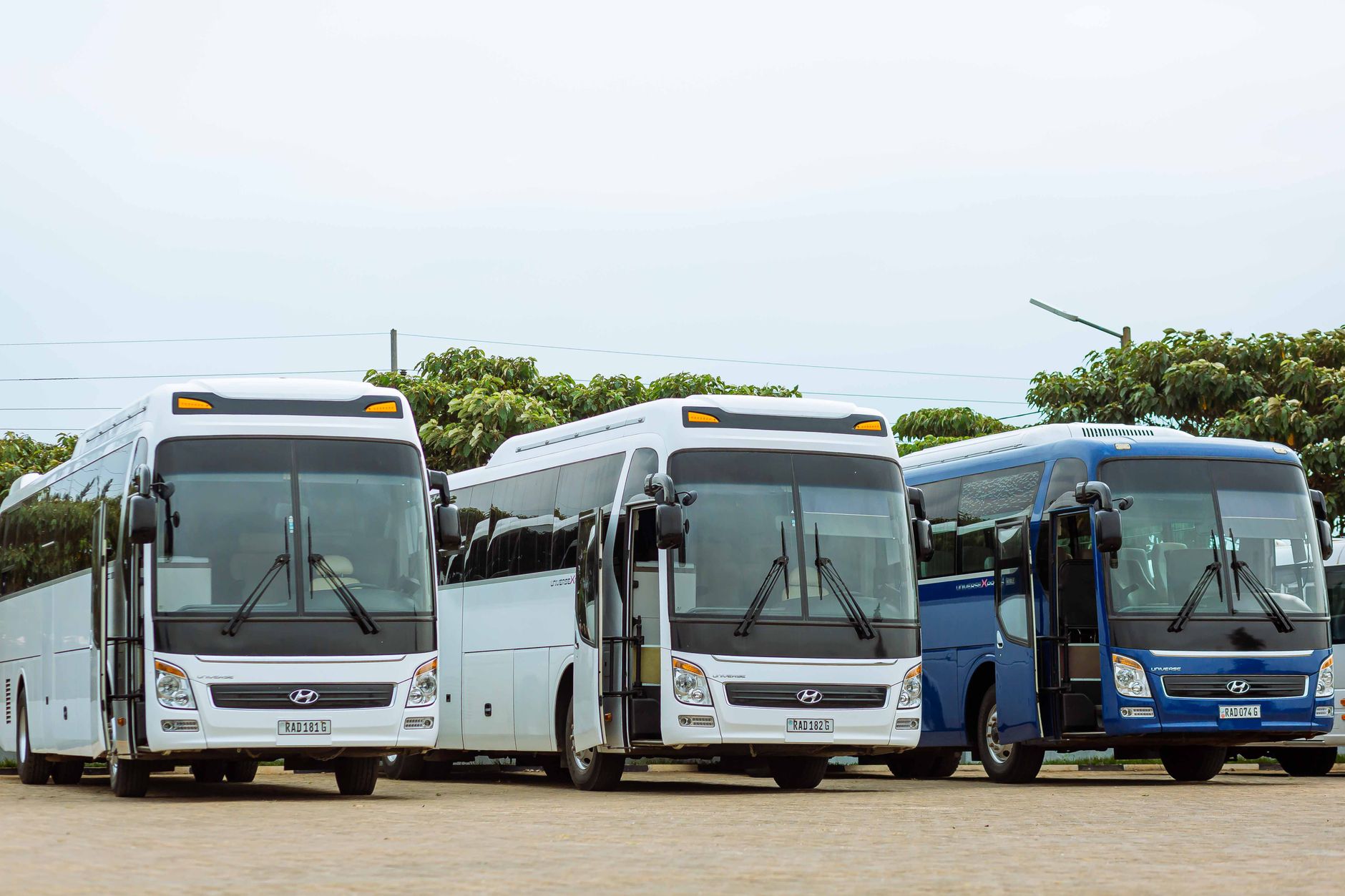
Fleet Options
Choose the vehicle from the passenger count, luggage volume, route length, and access conditions rather than headcount alone. A long Pacific group travel corridor usually favors a full-size motor coach, while a local gala shuttle or donor inspection tour may fit a mini coach or executive Sprinter. Ask whether passengers will bring suitcases, instruments, uniforms, campaign displays, or mission supplies because cargo can determine the fleet size. Tight downtown curbs, historic venues, hotel porte-cocheres, beach roads, and mountain destinations may require smaller vehicles or remote staging. For a large Non-Profit Fundraiser, matching vehicles across the fleet simplifies manifests, loading, and departure control.
| Vehicle | Seats | Best For | Notes |
|---|---|---|---|
| 56-passenger motor coach | 40-56 passengers | Use for LA-San Diego, LA-San Francisco, LA-Las Vegas, Tahoe, Mammoth, and large multi-day mission or donor movements. | Best comfort and cargo capacity for long corridors, overnight trips, luggage, instruments, and large gala shuttles; confirm venue clearance and commercial loading space. |
| 35-40 passenger motor coach | 30-40 passengers | Use when the group needs highway comfort and luggage capacity but does not fill a 56-passenger coach. | Provides coach seating and underfloor storage with a smaller footprint than a full-size bus, making it useful for moderate groups and venues with tighter access. |
| 20-28 passenger mini coach | 18-28 passengers | Use for regional donor tours, smaller mission groups, airport transfers, and venue-to-hotel shuttles. | Fits hotel loops, local gala routes, wine-country stops, and narrower streets better than a full-size coach, though cargo space is more limited. |
| Executive Sprinter | 8-14 passengers | Use for board travel, major-donor site visits, airport movements, or a discreet Pacific group travel itinerary for a small delegation. | Works for small leadership groups and short transfers, but passengers must limit luggage because available cargo space is modest when all seats are occupied. |
Routing, Timing, and On-the-Road Realities
California routing should be planned by time of day, not mileage alone. LA-San Diego traffic can build on I-5 through Orange County, while LA-San Francisco service on US-101 or I-5 needs a realistic full-day operating plan and a driver-hours review. LA-Las Vegas runs on I-15 and can be disrupted by holiday traffic, desert heat, construction, or incidents near the Cajon Pass and Nevada line. Wine-country coaches should avoid treating a winery address as a guaranteed bus turnaround; confirm gate widths, road grades, parking surfaces, and whether the property wants the vehicle staged off the main entrance. Mammoth and Tahoe itineraries need winter departure buffers, chain-control checks, and a plan for snow equipment, passenger loading, and overnight parking. For city galas, schedule pickup waves early enough to absorb hotel elevator delays, bag loading, security screening, and curb congestion before the dinner or program start.
Hawaii routing benefits from a hotel-loading plan and an agreed staging location before the group arrives. Waikiki streets are busy, curb space is controlled, and a bus may need to circulate rather than wait directly outside a ballroom or resort entrance. For North Shore service, route timing should account for H-1 and H-2 congestion, weekend traffic, construction, and stops near Haleiwa, Waimea Bay, Laie, or Turtle Bay. Kailua and Windward Coast trips using the Pali or Likelike corridors need a clear passenger drop point because beach and residential areas rarely provide unlimited commercial parking. Build driver-hours around the full duty window, including airport meet-and-greet, hotel waiting, venue standby, and the return after a gala. For large group travel, assign one lead coordinator, number each vehicle, use a manifest, and set a departure procedure so the second or third bus does not leave while passengers are still inside the venue.
What This Typically Costs
A Pacific Non-Profit Fundraiser transportation quote usually starts with the vehicle, service dates, daily minimum, and the total route rather than passenger count alone. LA-San Diego, LA-San Francisco, and LA-Las Vegas trips are priced around mileage, schedule length, tolls, and whether the coach must deadhead to the first pickup or return empty after the event. Multi-day motor coach work commonly includes driver overnight lodging, parking, meals or per diem, and a second driver when the itinerary exceeds safe hours-of-service limits. Ski trips to Mammoth or Tahoe can carry winter-weather contingencies, chain-control delays, mountain-road restrictions, and seasonal demand premiums. Hawaii quotes may include island-local staging, airport or hotel access time, and added operating time for routes between Waikiki, Kailua, and the North Shore. Typical line items can include fuel adjustments, tolls, venue parking, driver gratuity, cleaning, wheelchair service, and extra standby hours; in most markets, a full-size coach commonly runs a few thousand dollars per day, while smaller vehicles usually cost less but may require multiple units.
Frequently Asked Questions
How many passengers can a Pacific nonprofit group usually move?
Most groups fall between 20 and 56 passengers. A capital-campaign donor tour may use a 14-passenger executive Sprinter or a 24- to 35-passenger mini coach for a more controlled itinerary, while a gala shuttle often needs several 40- to 56-passenger motor coaches. Mission tours can range from a church-sized group with luggage and supplies to a 100-plus-person delegation split across multiple charter buses. Final sizing should account for bags, instruments, uniforms, mobility equipment, and whether everyone rides together between stops.
What routes are common for nonprofit donor tours and galas in California?
Common California patterns include hotel-to-venue gala shuttles in Los Angeles, Pasadena, San Francisco, Oakland, San Jose, and San Diego; donor tours between campuses, hospitals, cultural institutions, and project sites; and multi-day runs linking LA, San Diego, San Francisco, Sacramento, or Las Vegas. Examples may include downtown Los Angeles or Pasadena event locations, the San Francisco Embarcadero, Pier 27, Mission Bay, or San Diego venues near downtown and Mission Hills. Wine-country programs commonly connect San Francisco, Oakland, Napa, Sonoma, and Healdsburg, while ski programs run from Southern California toward Mammoth or from the Bay Area and Sacramento toward Tahoe. A detailed stop list is necessary because venue access and bus parking vary block by block.
How does Hawaii nonprofit group travel differ from California service?
On Oahu, nonprofit groups commonly base in Waikiki and run shuttles to downtown Honolulu, Kakaako, Pearl Harbor, Kailua, Kaneohe, Ko Olina, or North Shore locations near Haleiwa, Laie, and Turtle Bay. The Hawaii Convention Center, Hilton Hawaiian Village, Ala Moana hotels, Royal Hawaiian, Moana Surfrider, and Sheraton Waikiki are frequent hotel or event reference points. H-1 westbound traffic can affect Ko Olina and airport movements, while H-1 and H-2 toward Haleiwa, plus the Pali and Likelike highways, can make afternoon timing unpredictable. Kailua and Windward Coast programs need a loading plan because residential streets and beach-area parking are not designed for repeated large-bus circulation. For a Hawaii island-market booking, confirm whether service is limited to Oahu or whether separate local transportation is required on another island.
Can a motor coach carry instruments, uniforms, supplies, and wheelchairs?
Yes, but the itinerary needs to identify the equipment and how it will be loaded. A charter bus can handle personal luggage, boxed campaign materials, folding tables, musical instruments, uniforms, and moderate event gear, but passenger seating and underfloor storage are finite. Large instruments, donation supplies, or production cases may require a coach with adequate bays, a dedicated cargo van, or a second vehicle. Wheelchairs should be disclosed before quoting so an accessible motor coach can be assigned rather than improvised at pickup. Drivers need a loading sequence, contact person, and count of cases so departure does not turn into an unplanned warehouse operation.
Which vehicle should a nonprofit choose for a donor tour or gala?
A 56-passenger motor coach is generally the most efficient choice for long corridors, overnight travel, and groups carrying luggage because it offers a restroom, reclining seats, climate control, and substantial underfloor storage. A 35- to 40-passenger coach can fit donor tours or mission groups that need more room per person without operating a full-size bus. A 20- to 28-passenger mini coach works well for local gala shuttles, hotel loops, and narrow venue approaches. Executive Sprinters are useful for small donor delegations, board members, or airport transfers, but their cargo capacity and passenger comfort decline quickly when every seat and bag position is used.
How are large nonprofit groups managed across multiple vehicles?
For 100 to 250 passengers, dispatch typically divides the movement into identical waves or uses multiple vehicles on staggered hotel pickups. Each unit needs a numbered manifest, radio or phone contact, a defined loading curb, and a lead coordinator who can release vehicles in sequence. At venues such as downtown hotels, waterfront event spaces, or constrained city blocks, buses may need to stage remotely and rotate through the curb rather than wait at the entrance. A second vehicle also provides operational separation when one group visits a different project site or returns on a different schedule. Build extra time for bag loading, accessibility boarding, credential checks, and post-event departures when several buses share one exit.
What information is needed to book a Pacific nonprofit charter bus?
Provide the service dates, passenger count, pickup addresses, hotel names, venue contacts, flight details if applicable, and every planned stop. Include luggage volume, instruments or cases, uniforms, supplies, wheelchair needs, meal stops, desired departure windows, and whether the group needs the vehicle to remain on standby. For California routes, identify mountain passes, wine-country properties, or downtown loading restrictions; for Hawaii, specify the island, resort, and whether the run includes Waikiki, Kailua, Ko Olina, or North Shore. A quote should normally be returned within 4 business hours when the itinerary is complete. The confirmation should show the vehicle type, passenger capacity, service hours, routing assumptions, pickup instructions, inclusions, exclusions, cancellation terms, and dispatcher contact.
How to Book
Start with the dates, pickup address, headcount, hotel list, venue addresses, flight information, and a complete itinerary, including planned stops and return times. Add luggage totals, instruments, uniforms, supplies, wheelchair requirements, meal stops, standby periods, and any mountain or island routing. US Bus Trips can typically return a realistic quote within 4 business hours when those details are available, with assumptions clearly identified. The confirmation includes the assigned vehicle class, capacity, service window, routing, pickup instructions, pricing inclusions, cancellation terms, and dispatcher contact, and the booking team can be reached through the US Bus Trips request channel.
Related Trips You Might Also Consider
- College Band Tour — Pacific Northwest Region
- Veterans Group — South Central Region
- Wisconsin Dells — 14-Passenger Sprinter
- Government Agency Shuttle — Pacific Northwest Region
- Arlington, TX to Austin, TX
- Cleveland, OH to Detroit, MI
- Cross-Country Charter Bus Overview
- All Group Tour Destinations
- See the Full Fleet (Sprinters through 56-pax coaches)
- Get a Free Quote in 60 Seconds