
US Bus Trips books Government Agency Shuttle service for federal and state employees, interagency meetings, field teams, and conference delegations across Washington, Oregon, and Alaska.
Overview
A Government Agency Shuttle in the Pacific Northwest is usually more structured than a sightseeing charter. Federal agencies, state departments, tribal partners, emergency-management teams, laboratories, universities, and contractors commonly book transportation for interagency conferences, inspections, training sessions, field deployments, and employee transfers. The core corridor is I-5 between Seattle, SeaTac, Tacoma, Olympia, Vancouver, and Portland, with Salem and Eugene added when the meeting or worksite is farther south. Seattle-area work may involve convention hotels near the Washington State Convention Center, SeaTac airport hotels, Joint Base Lewis-McChord, or agency campuses in the central Puget Sound. Portland assignments often use the Oregon Convention Center, Portland International Airport hotels, downtown government offices, or suburban meeting sites in Beaverton, Hillsboro, and Vancouver, Washington. A motor coach keeps the group together and gives travelers a controlled work environment, but the schedule must allow for congestion, secure loading, and venue-specific curb rules.
Typical loads range from fewer than 15 passengers in an executive Sprinter to 20 to 35 in a mini coach, 38 to 45 in a medium motor coach, and 45 to 56 in a full-size charter bus. Passenger count alone is not enough for a Pacific Northwest group travel quote because a team carrying instruments, uniforms, survey equipment, safety cases, skis, rain gear, or boxed conference materials may need the next larger vehicle. Accessible service should be identified at booking, especially when wheelchairs or mobility devices must remain with the group during a multi-day itinerary. Common regional patterns include Seattle to Spokane, Olympia to the coast, Portland to Salem or Eugene, and transfers from metro hotels to mountain, forest, or coastal worksites. Scenic routes through the Olympic Peninsula, Mount Rainier area, Columbia River Gorge, Oregon Coast, and central Oregon can add narrow roads, seasonal closures, limited coach parking, and longer recovery times. For large delegations, dispatch may split the load across multiple vehicles so one late department does not hold every passenger at the curb.
Conference shuttles often operate as a fixed loop between an airport hotel cluster, a government campus, and a venue, with early morning arrivals, midday rotations, and a final evening return. Relevant sites include Seattle convention facilities, Tacoma meeting hotels, the Washington State Capitol area in Olympia, Portland convention facilities, Salem civic and state-government areas, Eugene conference hotels, Spokane meeting venues, and Anchorage hotels or civic facilities. Washington ferry work adds a separate planning layer for Port Townsend, Coupeville, Anacortes, Friday Harbor, and other Puget Sound destinations. Alaska operations are usually airport, hotel, port, and excursion movements around Anchorage, Juneau, Whittier, and Seward, with ship schedules controlling the usable window. Summer is the main peak for Alaska cruise work, coastal travel, mountain field programs, and ferry-dependent group travel, while spring and fall bring conference and training demand. Winter requires extra time for mountain routes, darkness, snow, chain controls, and possible weather diversions, particularly near Stevens Pass, Snoqualmie Pass, the Cascades, and interior Alaska. A reliable charter bus plan includes a local dispatch contact, passenger manifest or department roster when required, and a recovery plan for traffic, weather, ferry delays, or a delayed meeting release.
Fleet Options
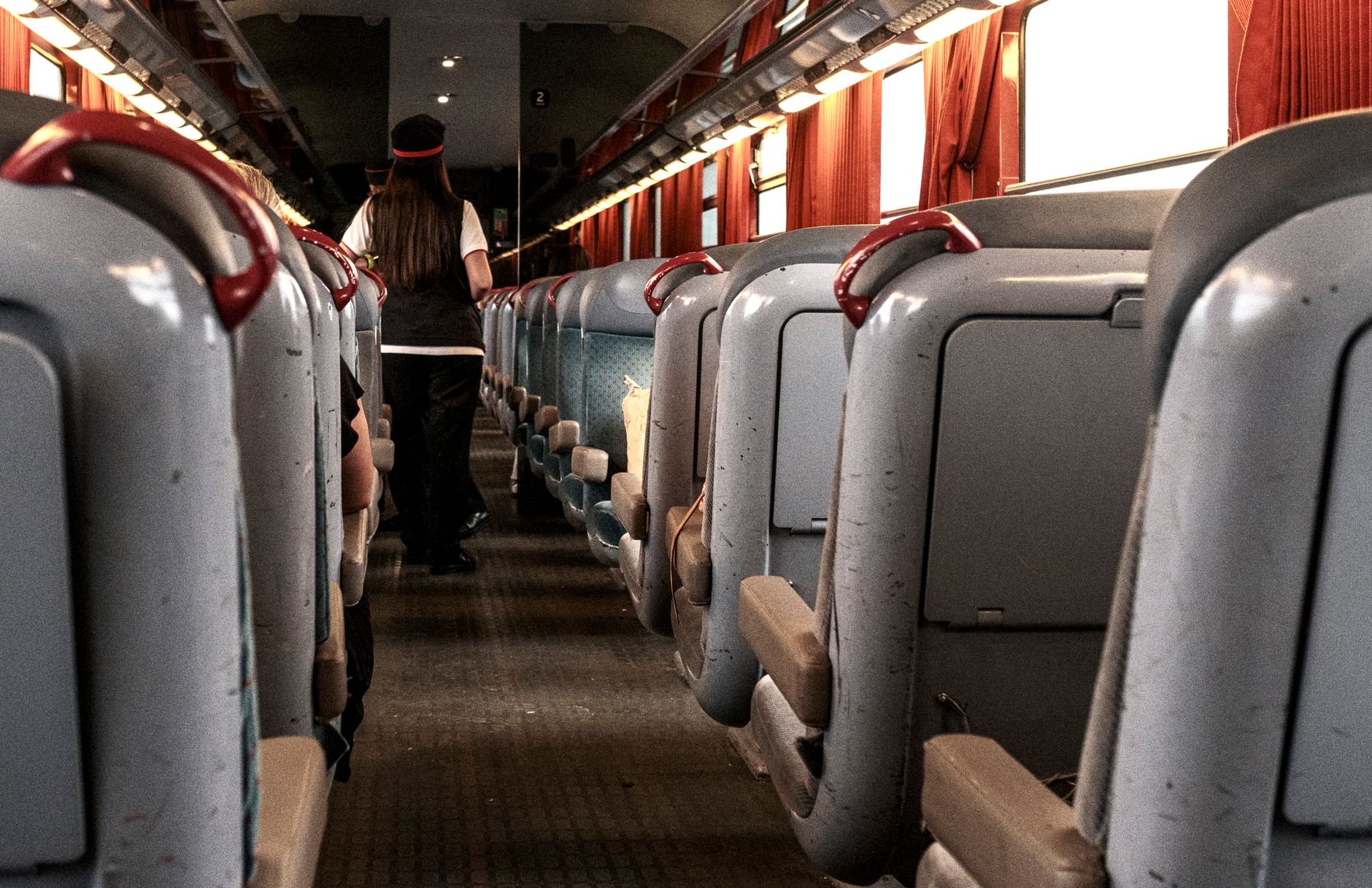
Vehicle selection starts with the headcount on each service day, then moves to luggage, equipment, accessibility, and the physical limits of the route. A charter bus gives the best passenger comfort and cargo capacity for long I-5 transfers, large conference delegations, and multi-day group travel. A mini coach or mini bus is easier to stage at downtown hotels, government campuses, ferry terminals, and venues with tight curb access. Executive Sprinters fit small teams but can run short on luggage space when every passenger carries work gear. For a Government Agency Shuttle, the right answer may be a mixed fleet with one full coach for the main movement and smaller vehicles for overflow, executives, or staggered schedules.
| Vehicle | Seats | Best For | Notes |
|---|---|---|---|
| 56-passenger motor coach | 45-56 passengers | Use for full agency delegations, long I-5 transfers, conference movements, and multi-day Pacific Northwest group travel with substantial luggage or gear. | Best underfloor luggage capacity and highway comfort, with restroom availability on many units; confirm curb access, parking height, ferry dimensions, and equipment loading before dispatch. |
| 38-45 passenger motor coach | thirty-eight to 45 passengers | Use when the group is medium-sized or when a full-size coach would be difficult to stage at a hotel, campus, ferry terminal, or coastal venue. | Provides coach comfort with a smaller footprint than a full-size bus and is practical for regional corridors, but cargo space should be checked when uniforms, instruments, or field cases are carried. |
| 24-35 passenger mini coach | 24-35 passengers | Use for department teams, hotel loops, inspection routes, coastal transfers, and split operations where a full charter bus is excessive. | Handles tighter streets, smaller parking areas, and scenic or mountain approaches more easily; luggage bays and wheelchair access vary by unit and must be confirmed. |
| Executive Sprinter or mini bus | 8-20 passengers | Use for leadership teams, airport transfers, site inspections, dispatch support, or overflow legs within Seattle, Portland, Anchorage, or other metro areas. | Comfortable for short executive movements and small crews but has limited luggage capacity, so large cases, wheelchairs, and field equipment may require a second vehicle. |
Routing, Timing, and On-the-Road Realities
The Seattle-Portland I-5 corridor is operationally simple only on a map. Morning traffic builds around Seattle, SeaTac, Tacoma, Joint Base Lewis-McChord, Olympia, Vancouver, and Portland, so employee pickups should be sequenced before the main congestion window whenever the agenda allows. A coach leaving downtown Seattle for Portland may need separate pickup time for SeaTac, Tacoma, or Olympia rather than treating the run as a nonstop transfer. Portland traffic can affect the Oregon Convention Center, downtown hotels, the airport, and cross-river movements into Vancouver, Washington. For venues with limited curb space, dispatch should use a timed loading plan, a nearby staging location, and a single on-site coordinator rather than sending several vehicles to the same door. Driver-hours planning must include deadhead mileage, relief breaks, conference standby, and the return leg, not just the published passenger movement. Multi-vehicle operations work best with numbered buses, a lead vehicle, a common radio or phone channel, one manifest owner, and staggered departure instructions.
Puget Sound and scenic routes require more schedule protection than a standard urban shuttle. Washington State Ferries permits vehicle reservations on the Port Townsend-Coupeville and Anacortes-San Juan Islands routes, and reserved vehicles should arrive early; current guidance calls for roughly 30 to 45 minutes at Port Townsend-Coupeville and 45 to 60 minutes at Anacortes-San Juan Islands. Reservations are one-way and do not replace ferry tickets, while other ferry routes may not offer vehicle reservations, so the operator must verify the sailing and vehicle procedure for the actual route. Olympic Peninsula, Mount Rainier, Columbia River Gorge, Oregon Coast, and Cascade itineraries should allow for narrow approaches, seasonal road restrictions, limited parking, and no easy place to turn a full charter bus around. Alaska shore-excursion routing requires the coach to work backward from the ship's all-aboard time, customs release, guide handoff, port staging, and weather contingency. For a Government Agency Shuttle that crosses state lines or includes Alaska positioning, the dispatch plan should show each service day, overnight city, driver handoff or relief point, ferry or port window, and the latest acceptable arrival time.
What This Typically Costs
Pricing for a Government Agency Shuttle is usually built from a daily vehicle minimum plus mileage, rather than from passenger count alone. A short local shuttle in Seattle, Portland, Tacoma, Olympia, Salem, Eugene, Spokane, or Anchorage may price as a minimum service day, while an I-5 corridor charter bus running between Seattle and Portland is more affected by total miles, deadhead positioning, and the number of service days. Multi-day Pacific Northwest group travel adds driver overnight and lodging costs, with higher demand commonly appearing during summer cruise season, convention dates, university calendars, and major agency meetings. Federal customers often compare transportation against approved GSA or agency travel policy, but per-diem rates reimburse traveler expenses and do not create a fixed charter bus price. Typical line items include fuel adjustments, tolls, ferry charges, parking, permits, driver gratuity, extra standby hours, and hotel costs for the driver. Most markets commonly run from a few thousand dollars per day for a standard motor coach operation to higher totals for multiple vehicles, remote positioning, ferry crossings, or Alaska service, with the final range depending on the signed itinerary.
Frequently Asked Questions
Can a federal agency book a charter bus using GSA per-diem rates?
Yes, but the GSA rate normally applies to the employee's reimbursable lodging and meals, not to a guaranteed charter bus tariff. A transportation quote should be separated from traveler per diem so the agency can code the costs correctly. FY 2026 federal reimbursement guidance keeps standard CONUS lodging and meals structures in place, while Alaska rates are established separately from CONUS rates. US Bus Trips can provide an itemized charter bus proposal showing vehicle time, mileage, ferry charges, parking, driver lodging, fuel adjustments, and any standby period.
What vehicle mix works for an interagency conference shuttle?
The usual pool includes a 56-passenger motor coach for a full delegation, a 38- to forty-five-passenger coach for a medium group, a 24- to thirty-five-passenger mini coach for shorter transfers, and executive Sprinters for small leadership teams or split schedules. A Government Agency Shuttle may need more seats than the headcount suggests when passengers carry uniforms, field kits, instruments, mobility equipment, or checked luggage. For a rolling conference program, two smaller vehicles can be more practical than one large coach if departments have different pickup windows. The final mix should account for the number of hotel stops, loading time, accessibility, and whether the vehicle must remain on standby.
Which Pacific Northwest cities are common for agency group travel?
The Seattle to Portland I-5 spine is the most repeatable Pacific Northwest group travel pattern, linking Seattle, SeaTac, Tacoma, Olympia, Vancouver, Portland, and sometimes Salem or Eugene. Other common runs connect Seattle or Tacoma with Bellingham, Everett, Spokane, Wenatchee, Yakima, Tri-Cities, or the Olympic Peninsula. Oregon itineraries often use Portland, Salem, Eugene, Bend, Medford, the Columbia River Gorge, or the coast near Astoria, Seaside, Newport, and Florence. Alaska work is usually concentrated around Anchorage, the airport and downtown hotel district, Whittier, Seward, or Juneau cruise and shore-excursion operations.
How do ferries affect a Government Agency Shuttle in Washington?
Ferry planning must begin when the itinerary is drafted, not after the bus is assigned. Washington State Ferries accepts vehicle reservations on the Port Townsend-Coupeville and Anacortes-San Juan Islands routes, while many other routes operate without vehicle reservations. For reserved sailings, operators should plan terminal arrival roughly 30 to 45 minutes early on Port Townsend-Coupeville and 45 to 60 minutes early for Anacortes-San Juan Islands, then confirm vehicle length and height requirements. A charter bus still needs passenger and vehicle ticket arrangements, and a reservation is not itself a ticket. Weather, loading queues, sailing changes, and limited recovery options can require a buffer or a backup sailing.
What should agencies know about Alaska cruise-ship coach work?
Cruise-ship shore-excursion work requires tight coordination between ship arrival, customs release, tour dispatch, and the required return-to-ship time. In Alaska, common operations link Juneau, Anchorage, Whittier, and Seward, with coach staging and guide coordination handled around port restrictions and excursion windows. A motor coach may need to meet a ship at one port and deadhead or reposition for a later sailing, so the quote should identify empty miles and overnight requirements. Luggage, mobility devices, rain gear, and camera equipment can consume substantial underfloor or interior capacity. Operators should also plan for narrow mountain approaches, wildlife-tour delays, weather, and limited fuel or service options outside the main Alaska corridors.
How early should an agency reserve an accessible or equipment-heavy bus?
A full-size charter bus is usually the cleanest solution for 40 to 56 travelers with luggage and equipment, especially on the I-5 corridor or between major conference hotels and venues. Mini coaches work well for 20 to 35 passengers, hotel loops, mountain access, and venues with constrained curb space or limited parking. Executive Sprinters and mini buses fit small executive groups, inspection teams, or staggered department movements, but their luggage capacity is limited compared with a motor coach. Wheelchair users may require an accessible lift-equipped vehicle, which should be requested before assignment rather than added at the curb. When a route includes ferries, steep grades, winter weather, or long standby periods, capacity, underfloor storage, restroom availability, and driver relief matter as much as seat count.
What information is needed to quote a multi-day agency shuttle?
For a single-day local shuttle, provide the first pickup, final drop, number of loops, and expected standby window. For multi-day Pacific Northwest group travel, provide each overnight city, hotel, venue, ferry sailing, excursion, and return deadline so driver-hours and lodging can be checked before pricing. Include passenger count by day, luggage volume, instruments, uniforms, field gear, wheelchair users, and any security or credentialing requirements. Large groups should identify whether vehicles must move together or can be dispatched in waves. Dates around summer cruise traffic, convention weeks, university events, and winter mountain travel should be submitted early because coach availability can tighten.
How to Book
To request a Government Agency Shuttle quote, send the service dates, first pickup address, final destination, passenger count by day, complete itinerary, and every hotel or venue stop. Include luggage volume, instruments, uniforms, field gear, wheelchair requirements, ferry crossings, cruise-ship timing, and whether the vehicle must remain on standby. US Bus Trips typically returns a workable quote within 4 business hours when the route details are complete. Confirmation includes the assigned vehicle class, passenger capacity, pickup instructions, itinerary, included service hours, known surcharges, driver lodging plan, and dispatch contact; reach us by phone or the website inquiry form.
Related Trips You Might Also Consider
- Sports Team Travel — Pacific Region
- Rocky Mountain National Park — 36-Passenger Mini Coach
- Wedding Guest Block — Southeast Region
- Santa Ana, CA to San Diego, CA
- Robotics Competition — Pacific Northwest Region
- Association Conference — South Central Region
- Cross-Country Charter Bus Overview
- All Group Tour Destinations
- See the Full Fleet (Sprinters through 56-pax coaches)
- Get a Free Quote in 60 Seconds