
US Bus Trips arranges Rocky Mountain National Park group tour transportation for schools, churches, associations, reunions, and escorted travel programs that need one motor coach for a multi-day route.
Overview
A Rocky Mountain National Park group tour works best when the transportation plan is built before the hotel block and attraction schedule are locked. Common customers include school groups, church ministries, university alumni, family reunions, outdoor clubs, senior associations, and commercial tour operators traveling from Denver, Colorado Springs, Cheyenne, Salt Lake City, or farther away. The usual corridor runs through I-25 and US 36 toward Boulder and Lyons, then into Estes Park and the Beaver Meadows entrance. Groups arriving through Denver International Airport often need an airport transfer, a staging night, and a next-morning park departure rather than an immediate high-country run. A 56-Passenger Motor Coach handles the long approach efficiently, but the dispatcher still needs realistic loading times for luggage, restrooms, meals, and head counts.
The best operating season is generally June through September, with July and August carrying the strongest demand for lodging, park access, and motor coach availability. Late September and early October can be attractive for fall color around Estes Park and the lower elevations, but weather can change quickly and high roads may not be reliable. A typical group tour uses day 1 for travel, fuel, meals, and an arrival stop in Denver, Boulder, or Estes Park; days 2 and 3 cover the park; and the final day handles a return corridor or an added Colorado stop. Popular planning points include Beaver Meadows Visitor Center, Moraine Park, Many Parks Curve, Bear Lake Road, Grand Lake, and Trail Ridge Road when it is open and suitable for the vehicle. Timed-entry rules, commercial-tour status, and Bear Lake Road access should be checked for the specific operating year, not copied from a prior itinerary.
Lodging usually stages in Estes Park for east-side departures, with Loveland, Longmont, Boulder, and Denver used when room blocks, airport access, or pricing control the decision. Grand Lake is useful for a west-side overnight, but adding it can require a longer transfer and a seasonal high-country crossing. A full motor coach needs confirmed hotel approach roads, a legal overnight parking location, a passenger loading zone, and enough clearance for luggage-bay access. Restaurants should be selected for bus parking and timed seating because a group of 56 can lose substantial schedule time at a venue designed for cars. Park reservations or commercial authorizations do not guarantee a space at every trailhead, so the itinerary should identify visitor-center parking, park-and-ride options, or a planned shuttle connection where necessary.
Fleet Options
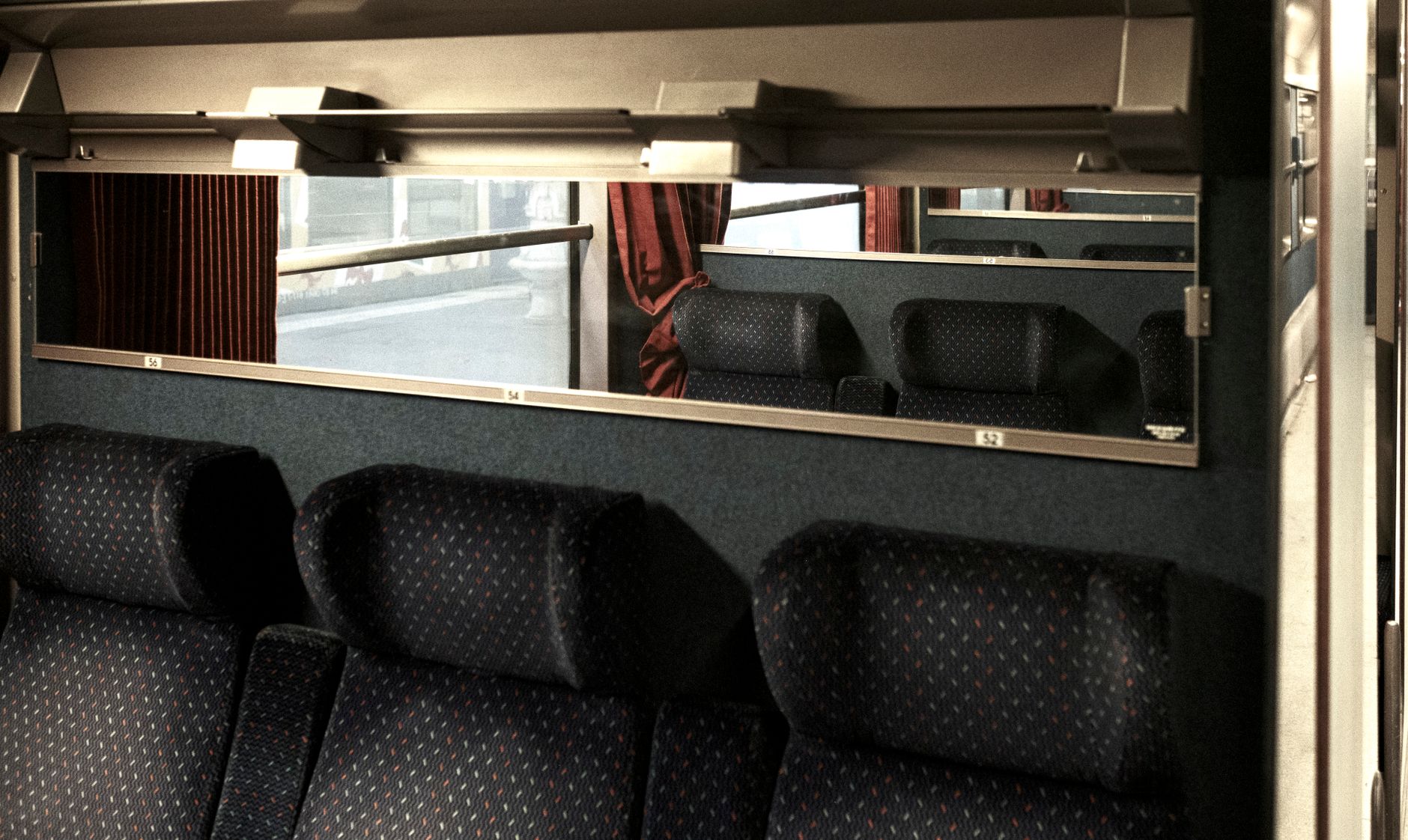
Vehicle choice starts with passenger count, luggage volume, pickup geometry, and the number of daily stops. A 56-Passenger Motor Coach is the best fit when a full group needs to stay together for a multi-day trip, with reclining seats, overhead storage, a restroom, DVD or USB amenities, and underfloor luggage bays. Smaller vehicles can be easier at hotel drives, restaurant lots, and tight mountain pullouts, but splitting a group creates convoy management, extra driver coordination, and more complicated parking. For Rocky Mountain National Park, confirm turning space, clearance, seasonal road conditions, and whether the planned stop accepts a full-size coach before promising every trailhead.
| Vehicle | Seats | Best For | Notes |
|---|---|---|---|
| 56-Passenger Motor Coach | Up to 56 passengers | Use for a full-group multi-day tour with checked luggage and a preference for keeping everyone on one vehicle. | Best long-haul comfort with reclining seats, overhead storage, restroom, DVD or USB amenities, and underfloor luggage bays; needs planned coach parking and wide loading areas. |
| 40- to fifty-passenger Motor Coach | 40-50 passengers | Use when the roster is below full capacity or the itinerary includes several locations with limited bus parking. | Provides coach-level comfort and luggage capacity while leaving more flexibility at smaller hotel drives and visitor facilities than a full 56-passenger unit. |
| 24- to 35-passenger Mini Coach | 24-35 passengers | Use for a smaller group, a split departure, or a feeder leg between a hotel and a larger scheduled coach. | Easier to position at restaurants, event venues, and tighter urban streets, but has less underfloor luggage space and may require multiple vehicles for a large group. |
| Executive Sprinter Van | 8-14 passengers | Use for a small VIP group, scout vehicle, airport transfer, or support run rather than a 56-passenger park tour. | Useful for compact groups and advance staff, with the best street and parking flexibility but materially less luggage, restroom, and long-haul comfort capacity. |
Routing, Timing, and On-the-Road Realities
From Denver, the standard east-side approach uses US 36 through Boulder and Lyons to Estes Park, while groups from Colorado Springs generally use I-25 north before joining the same corridor. Denver metro and Boulder traffic can make a late-morning pickup expensive in driver time, so departures are commonly scheduled early enough to clear the Front Range before commuter and weekend congestion builds. A 56-Passenger Motor Coach should not be routed through narrow downtown streets or improvised trailhead pullouts simply to save a few minutes. Confirm the hotel's bus entrance, the coach's turning radius, and the location where passengers can load without blocking local traffic. For a day inside Rocky Mountain National Park, schedule fewer major stops and allow time for unloading, restrooms, photographs, and a complete head count. Scenic overlooks are not interchangeable with bus parking lots, and the driver may need to remain with the vehicle while the group uses a designated area.
Driver hours are a central constraint on every multi-day group tour. Passenger-carrier rules generally allow up to 10 hours of driving after 8 consecutive hours off duty, prohibit driving after a 15-hour on-duty window, and impose 60- or 70-hour weekly limits depending on the carrier's operating schedule. The clock includes more than highway movement, so a long transfer, hotel loading, park waiting, fueling, and a late dinner can consume the same duty day. A Denver departure, park sightseeing loop, and return to a Front Range hotel may require an early start, a shorter stop list, or a second driver rather than an optimistic itinerary. Trail Ridge Road and other high-elevation segments also require a weather and road-condition check before dispatch, especially in shoulder seasons. The final manifest should show pickup windows, meal stops, driver relief or hotel time, park entry timing, and a realistic return-to-hotel deadline.
What This Typically Costs
A 56-Passenger Motor Coach is usually quoted with a daily minimum, mileage, or a blended charter rate, depending on the carrier and trip length. A multi-day group tour commonly runs a few thousand dollars per day in many markets, with higher totals during summer, fall-color weekends, holidays, major Denver events, and limited mountain lodging dates. The quote should separate loaded miles from deadhead miles because the coach may need to travel empty from another city, reposition between hotel areas, or return after the final drop. Driver overnight lodging, meals or per diem, tolls, parking, mountain-road access, and any second-driver requirement can appear as separate line items. Fuel adjustments may apply when diesel prices move materially, while driver gratuity is commonly handled separately rather than built into the base rate. Ask whether the rate includes park access costs, hotel parking, local shuttle substitutes, and waiting time so the comparison is based on the complete operation.
Frequently Asked Questions
How many days should a Rocky Mountain National Park group tour take?
For most groups, plan on a three- to five-day group tour. A one-day visit is possible from Denver or nearby Front Range hotels, but it leaves little margin for mountain traffic, meal stops, trailhead parking, or weather. A practical multi-day plan uses day 1 for travel and staging, two or three in-park days, and a final day for return travel or a nearby stop. Longer itineraries can add Estes Park, Grand Lake, Boulder, Colorado Springs, or a route through Rocky Mountain National Park between other Colorado destinations.
What are the best months for a Rocky Mountain National Park group tour?
June through September is the most dependable operating window for a Rocky Mountain National Park group tour, but July and August bring the heaviest demand, traffic, and lodging pressure. Late September and early October can work well for fall color and cooler trail conditions, subject to weather and seasonal services. Trail Ridge Road and other high-elevation roads can have snow-related restrictions outside the core summer season. May and October departures need a flexible plan because storms, closures, and shoulder-season operating hours can affect the route.
What does a 56-Passenger Motor Coach include?
A 56-Passenger Motor Coach fits a full group of 56 passengers with reclining seats, overhead storage, a restroom, DVD or USB amenities, and luggage bays underneath. It is the workhorse of long-haul group travel when everyone needs to remain together across several states. The coach works especially well for school, alumni, church, association, reunion, and escorted-tour groups carrying checked luggage and day packs. It is less suitable for narrow residential pickup streets, small trailhead lots, or itineraries that require frequent short repositioning on tight mountain roads.
Does a motor coach need a permit or timed-entry reservation in Rocky Mountain National Park?
The carrier should review the exact itinerary, coach dimensions, and access roads before accepting mountain stops. Rocky Mountain National Park has timed-entry rules during parts of the summer season, although the National Park Service states that commercial tours and permitted commercial operators do not need the standard timed-entry reservation for their permitted trips. Bear Lake Road has separate seasonal access controls, and a reservation does not guarantee parking at a specific trailhead. A 56-Passenger Motor Coach may need to use designated bus areas, visitor-center lots, park-and-ride operations, or an approved transfer plan rather than stopping wherever passenger traffic appears light. Confirm commercial authorization, entrance arrangements, parking instructions, and any special-use requirements before the trip is dispatched.
What is a practical sample itinerary?
A realistic itinerary starts with day 1 travel from Denver, Colorado Springs, Cheyenne, or another origin, followed by a hotel check-in and a short local stop in Estes Park if driver hours allow. Day 2 can use an early park entry, Beaver Meadows, Moraine Park, Many Parks Curve, and the Estes Park area, with stops sized for group loading rather than individual trailhead parking. Day 3 can focus on the Bear Lake Road corridor only if the access plan, reservation or commercial-tour status, and vehicle staging are confirmed in advance. Day 4 may cross or approach Trail Ridge Road when open, then continue toward Grand Lake or return to Estes Park. A final day can cover the return corridor, with meal and fuel stops selected for coach access and restroom capacity.
How do driver hours affect the schedule?
Passenger-carrier hours-of-service planning generally allows up to 10 hours of driving after at least 8 consecutive hours off duty, with a 15-hour on-duty window and applicable 60- or 70-hour weekly limits. Those limits cover more than steering time: loading, inspections, fueling, waiting, passenger handling, and other on-duty work can consume the day. A Denver-to-Estes Park move followed by a full park loop can therefore require an early departure, a controlled stop schedule, or a second driver. A driver cannot simply extend the day because the group is still at a scenic overlook. For a multi-day group tour, build the schedule around legal duty time, hotel parking, driver lodging, and a protected return-to-hotel window.
Where should a large group stay?
The safest staging choice is usually Estes Park for east-side park access, with Loveland, Longmont, Boulder, or the Denver metro used when hotel inventory or group pricing requires it. Estes Park reduces the morning approach to Beaver Meadows and supports early departures, but large-coach hotel access and parking must be confirmed property by property. Grand Lake can stage west-side operations, though reaching it from the Front Range takes additional time and the route depends on seasonal high-country road conditions. Denver hotels are useful for airport arrivals and long-haul connections but add approach miles before the first park stop. Request a coach-accessible hotel entrance, overnight parking location, driver room plan, and backup loading point before finalizing the room block.
How to Book
To request a quote, have the travel dates, pickup address, passenger count, luggage estimate, hotel area, park stops, meal plans, and final drop-off ready. Include whether the group needs a 56-Passenger Motor Coach, a second vehicle, airport transfers, an overnight driver, or a west-side Grand Lake segment. US Bus Trips can typically return a preliminary quote within 4 business hours when the itinerary is complete, subject to carrier availability and route review. The confirmation should identify the vehicle class, operating dates, pickup and drop-off points, included mileage or deadhead treatment, driver lodging, parking assumptions, cancellation terms, and known park-access requirements.
Related Trips You Might Also Consider
- Wedding Guest Block — South Central Region
- NYC Theater — 36-Passenger Mini Coach
- Minneapolis, MN to Milwaukee, WI
- Sports Team Travel — Mid-Atlantic Region
- Aurora, CO to Denver, CO
- DC Monuments — 56-Passenger Motor Coach
- Cross-Country Charter Bus Overview
- All Group Trip Types
- See the Full Fleet (Sprinters through 56-pax coaches)
- Get a Free Quote in 60 Seconds