
Schools, districts, clubs, and universities book US Bus Trips for Academic Decathlon, Quiz Bowl, DECA, FBLA, and Model UN travel across Washington, Oregon, and Alaska.
Overview
Pacific Northwest academic competition travel is usually organized by public and private schools, district activities offices, colleges, club teams, and parent-led programs. Academic Decathlon groups often travel with students, coaches, alternates, and chaperones, while DECA and FBLA teams may add presentation clothing, display materials, and judging schedules. Quiz Bowl teams generally carry less cargo but need dependable arrival times and a quiet ride for students preparing between rounds. Model UN groups can be larger and more schedule-sensitive, with delegates moving between hotel meeting rooms, university buildings, and conference facilities. Seattle and Bellevue groups frequently use downtown hotels, the University of Washington, Seattle University, or conference venues in King County. Portland-area groups may route to downtown hotels, Portland State University, Oregon State University in Corvallis, or events in Salem and Eugene.
The normal group travel profile is an overnight or weekend movement rather than a simple point-to-point transfer. A school may load in Tacoma, Olympia, Everett, Vancouver, Salem, or Eugene, travel along I-5, stay near the host venue, and use the bus for scheduled hotel-to-competition shuttles. Other teams travel across the Cascades to Spokane, Pullman, or Walla Walla, where winter conditions and pass closures need more buffer than an I-5 itinerary. Coastal and mountain routes to Bellingham, the Olympic Peninsula, Bend, or southern Oregon add scenic mileage but can reduce passing options and driver flexibility. Puget Sound ferry crossings are workable when sailing reservations and coach dimensions are confirmed in advance. Alaska assignments are usually separate operating programs involving Anchorage, Fairbanks, Juneau, or Southeast Alaska port calls rather than a continuous road trip.
Demand follows event calendars and the school year. Fall is active for Model UN, leadership events, and invitationals, including Seattle-area conferences and Portland-area collegiate or high-school programs. Winter brings Quiz Bowl, indoor academic tournaments, and multi-day conferences when snow, ice, and early darkness can affect eastern Washington and mountain routes. Spring is a major period for DECA, FBLA, state competitions, and championship travel, with additional congestion around university commencements and large conferences. Summer may include national competitions, training camps, Alaska cruise-ship shore excursions, and tourism demand that reduces coach availability. Equipment planning matters: teams may carry uniforms, garment bags, instruments, rolling cases, poster boards, laptops, banners, and accessibility equipment. A wheelchair lift or secure mobility-device space must be identified before dispatch, not added at curbside.
Fleet Options
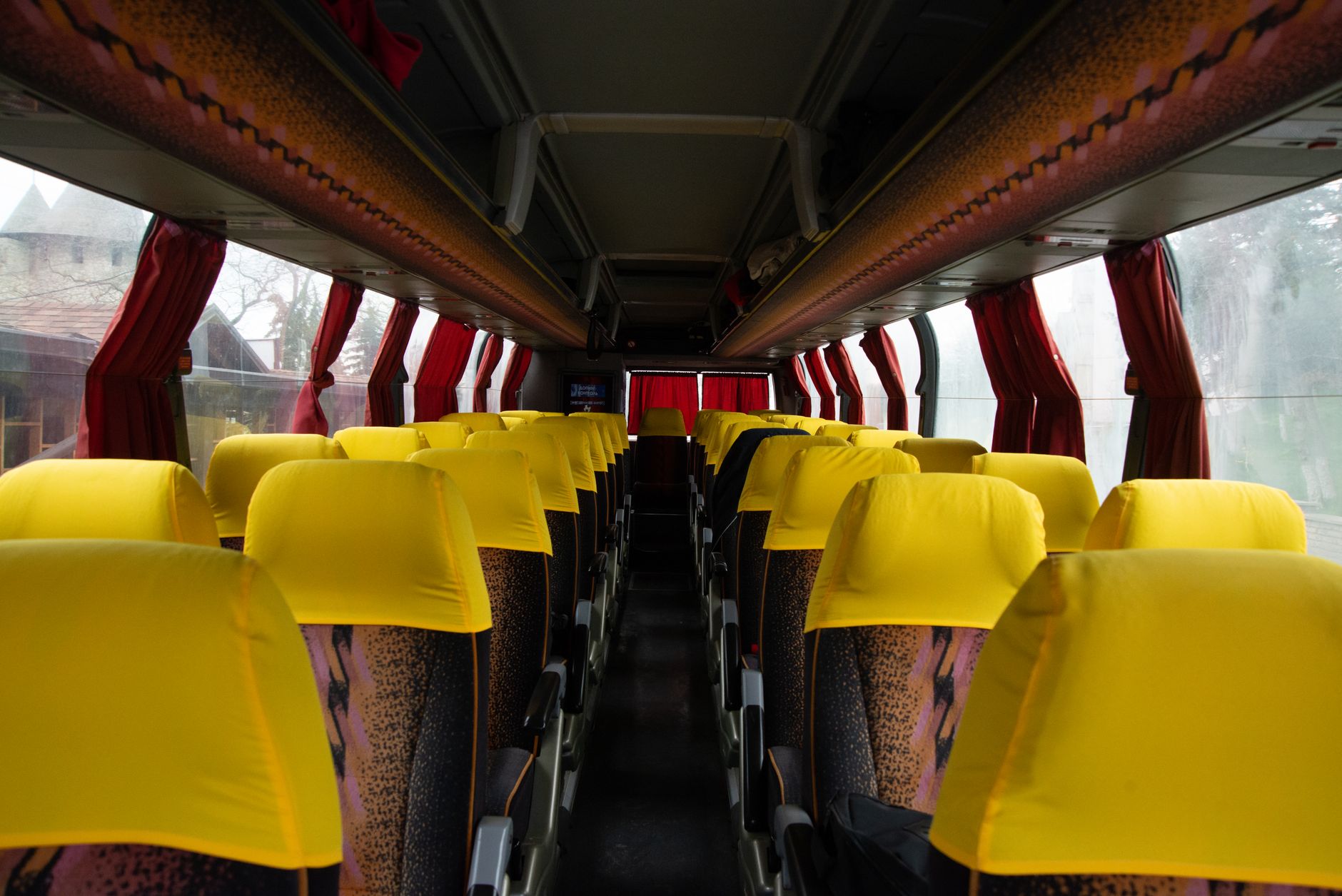
Start with the passenger manifest, then add capacity for bags, presentation materials, uniforms, and schedule changes. A charter bus gives the most efficient ride for a full delegation, while a mini coach or mini bus is easier to place at university loading zones and older downtown streets. An executive Sprinter is comfortable for a small staff group but can lose usable cargo room quickly when every passenger carries a suitcase or display case. Confirm wheelchair lift requirements, aisle access, storage, and hotel parking before assigning a vehicle. For multi-vehicle group travel, matching coaches is helpful, but separate vehicle sizes can reduce empty seats and improve access at tight venues.
| Vehicle | Seats | Best For | Notes |
|---|---|---|---|
| Full-size motor coach | 40-56 passengers | Use for a complete school delegation traveling between Seattle, Portland, Spokane, Eugene, or a regional championship venue. | Best highway comfort and underfloor storage for luggage, uniforms, instrument cases, and competition supplies, but requires a defined curbside loading point and coach parking plan. |
| Mid-size charter bus | 30-40 passengers | Use when the team has one substantial roster, moderate luggage, and stops at university or hotel locations with limited coach space. | Balances highway range, passenger comfort, and maneuverability, with less cargo capacity than a full-size coach and better access at many campus streets. |
| Mini coach or mini bus | 18-29 passengers | Use for a Quiz Bowl, Model UN, DECA, or FBLA delegation that does not need a full-size coach. | Fits shorter urban movements and smaller groups, but confirm whether luggage is stored inside because cargo bays are limited and display materials can consume seats. |
| Executive Sprinter | 8-14 passengers | Use for a small traveling party, advance team, or overflow vehicle rather than the main student delegation. | Works well for faculty, judges, airport transfers, or leadership staff, but passenger comfort and luggage space decline quickly with large bags, garment racks, or equipment cases. |
Routing, Timing, and On-the-Road Realities
The I-5 spine is the default route for Pacific Northwest group travel, but dispatchers still need exact pickup windows and venue addresses. Seattle, Tacoma, Olympia, Portland, Vancouver, Salem, and Eugene can look close on a map while weekday congestion changes arrival times substantially. Schedule early departures through the Seattle-Tacoma corridor and Portland metro, particularly when a team must check in before morning rounds. Downtown Seattle and Portland pickups should use an approved curb location rather than assuming a coach can wait outside a hotel or convention center. University campuses may require event permits, restricted loading windows, or a walk from the coach stop to the building. For Spokane, Pullman, Bend, or mountain routes, plan weather and chain-control contingencies and avoid promising the same timing used for a clear-weather I-5 run.
Puget Sound and Alaska require separate timing logic. A ferry crossing needs a confirmed sailing, terminal arrival buffer, and enough time for the coach to board with the reserved vehicle space; missed sailings can move the entire day. Olympic Peninsula routes may combine a ferry with narrow roads, so the driver schedule should not be built around a tight competition check-in. Alaska cruise-ship shore-excursion coaches operate against a vessel's port window, making passenger loading, scenic stops, and return-to-pier time more rigid than a school shuttle. Juneau, Ketchikan, and other Southeast Alaska port movements may require local operators, while Anchorage and Fairbanks trips are more road-based but still affected by distance and seasonal conditions. Driver-hours planning should include deadhead, meal stops, hotel parking, ferry queues, and the time needed to stage multiple vehicles before students arrive.
What This Typically Costs
Pacific Northwest academic competition trips are usually priced around a daily vehicle minimum, then adjusted for mileage, routing, vehicle class, and the number of service days. A short Seattle or Portland movement may carry a one-day minimum, while a multi-state Academic Decathlon or DECA run commonly uses several service days plus deadhead miles to position the coach. Peak pricing is common around fall Model UN, winter Quiz Bowl, spring DECA and FBLA conferences, and major championship weeks when coach supply tightens. Overnight assignments add driver lodging and, when applicable, meal or parking costs; remote Alaska work can also add ferry bookings, staging, or repositioning. Typical line items include tolls, venue parking, ferry reservations, fuel adjustments, and driver gratuity. In most markets, a regional motor coach commonly runs a few thousand dollars per day, but the final quote depends on the actual itinerary rather than a flat per-student rate.
Frequently Asked Questions
How many students fit on an academic competition bus?
For a standard academic competition, plan on one adult chaperone per vehicle unless school policy requires more. A 40 to 56 seat motor coach often carries 30 to 50 students plus coaches and chaperones, leaving room for backpacks, garment bags, and event materials. Smaller Quiz Bowl, DECA, or Model UN delegations may fit a 24 to 35 passenger mini coach. The final count should include drivers, staff, alternates, accessibility needs, and any students traveling separately.
What routes are common for Pacific Northwest academic teams?
The I-5 corridor is the most common regional spine, connecting Seattle, Tacoma, Olympia, Portland, Vancouver, Salem, and Eugene. Teams may branch east to Spokane, Pullman, or Walla Walla, north to Bellingham, or south and east toward Bend depending on the host campus. Seattle-area Model UN movements may serve downtown hotels, the University of Washington, Seattle University, Bellevue, or conference facilities in King County. Portland-area groups commonly use downtown hotels, Portland State University, Oregon State University in Corvallis, or venues near the airport and convention district. A written stop plan is essential when the itinerary crosses the Columbia River or includes mountain passes.
Which charter bus is best for DECA, FBLA, or Quiz Bowl?
The best vehicle depends on both headcount and the amount of equipment carried. A full-size charter bus is usually the practical choice for 35 or more travelers, while a mini coach or mini bus works better for a smaller delegation or a short urban transfer. Executive Sprinters are useful for judges, faculty, airport transfers, or small leadership teams, but they have limited luggage space once passengers bring competition materials. Full-size coaches need a legal loading location, turning clearance, and a parking plan, especially at downtown Seattle, Portland, and university venues. Tell the broker about instruments, presentation boards, rolling cases, uniforms, wheelchairs, and oversized science or display equipment before the vehicle is assigned.
Can a charter bus take an academic team on a Puget Sound ferry?
Yes, but ferry travel must be built into the dispatch plan rather than treated like ordinary road mileage. For Puget Sound crossings, the operator needs the exact sailing, vehicle dimensions, passenger count, and enough buffer for terminal queues and loading. A coach crossing from the Olympic Peninsula to Seattle or from Seattle to Bremerton can be affected by sailing availability, traffic at the terminal, and weather. Reservations and vehicle space should be confirmed early, particularly for peak summer travel and large coaches. Drivers may need separate instructions for terminal staging, boarding, and post-ferry unloading.
How does Alaska academic group travel differ from Washington and Oregon?
Alaska trips require a different operating plan from an I-5 corridor run. Juneau, Anchorage, Fairbanks, and Ketchikan may involve airport transfers, hotel shuttles, campus visits, or cruise-port shore excursions rather than one continuous coach itinerary. In Southeast Alaska, many shore-excursion movements are short, scheduled around vessel arrival and departure windows, and dependent on local motor-coach availability. If a vehicle travels by ferry, the reservation must account for coach length, boarding requirements, sailing schedules, and possible weather disruption. Build contingency time around cruise calls because a late return to the pier can create a hard operational deadline.
When should a Pacific Northwest academic team reserve a bus?
Peak demand usually follows the school calendar and conference calendar. Fall brings Model UN, leadership conferences, and early-season invitationals; winter brings Quiz Bowl, academic tournaments, and indoor competitions; spring is especially active for DECA, FBLA, state-level events, and championship travel. Graduation season and university commencement can tighten hotel and vehicle supply around Seattle, Portland, Eugene, and Spokane. Summer travel is less predictable for school teams but can overlap with camps, national competitions, Alaska cruise work, and tourism demand. Booking several weeks to several months ahead gives the dispatcher more flexibility on vehicle type, driver assignment, and staging.
How are large academic delegations managed across multiple buses?
Large delegations should be divided by school, grade, hotel, or competition schedule instead of loading every passenger into one vehicle without a manifest. Two or more coaches may stage at separate pickup points, use staggered departures, or run a shuttle between a hotel and venue. Each vehicle needs its own passenger list, lead chaperone, emergency contact, loading assignment, and driver communication plan. Equipment should be distributed so that one delayed vehicle does not strand every presentation team or judging group. For a championship with multiple venues, a dedicated equipment vehicle or early gear move may be more reliable than trying to carry everything with passengers.
How to Book
Have the dates, pickup address, passenger headcount, school or organization name, venue addresses, hotel, equipment list, accessibility needs, and required arrival time ready when requesting a quote. Include every planned stop, including meal stops, ferry crossings, airport movements, and separate staff or judge transfers. US Bus Trips can usually return a realistic quote within 4 business hours when the itinerary is complete and can identify vehicle class, service hours, mileage, overnight requirements, and known parking or ferry items in the confirmation. Contact the reservation team by phone or the website inquiry channel, then review the final manifest and pickup instructions with the trip lead before departure.
Related Trips You Might Also Consider
- New Orleans Mardi Gras — 56-Passenger Motor Coach
- College Band Tour — Northeast Region
- Agriculture FFA/4-H — Southeast Region
- Williamsburg — 14-Passenger Sprinter
- Nashville Music — 14-Passenger Sprinter
- Great Smoky Mountains — 56-Passenger Motor Coach
- Cross-Country Charter Bus Overview
- All Group Tour Destinations
- See the Full Fleet (Sprinters through 56-pax coaches)
- Get a Free Quote in 60 Seconds